



 Crude & refined trading
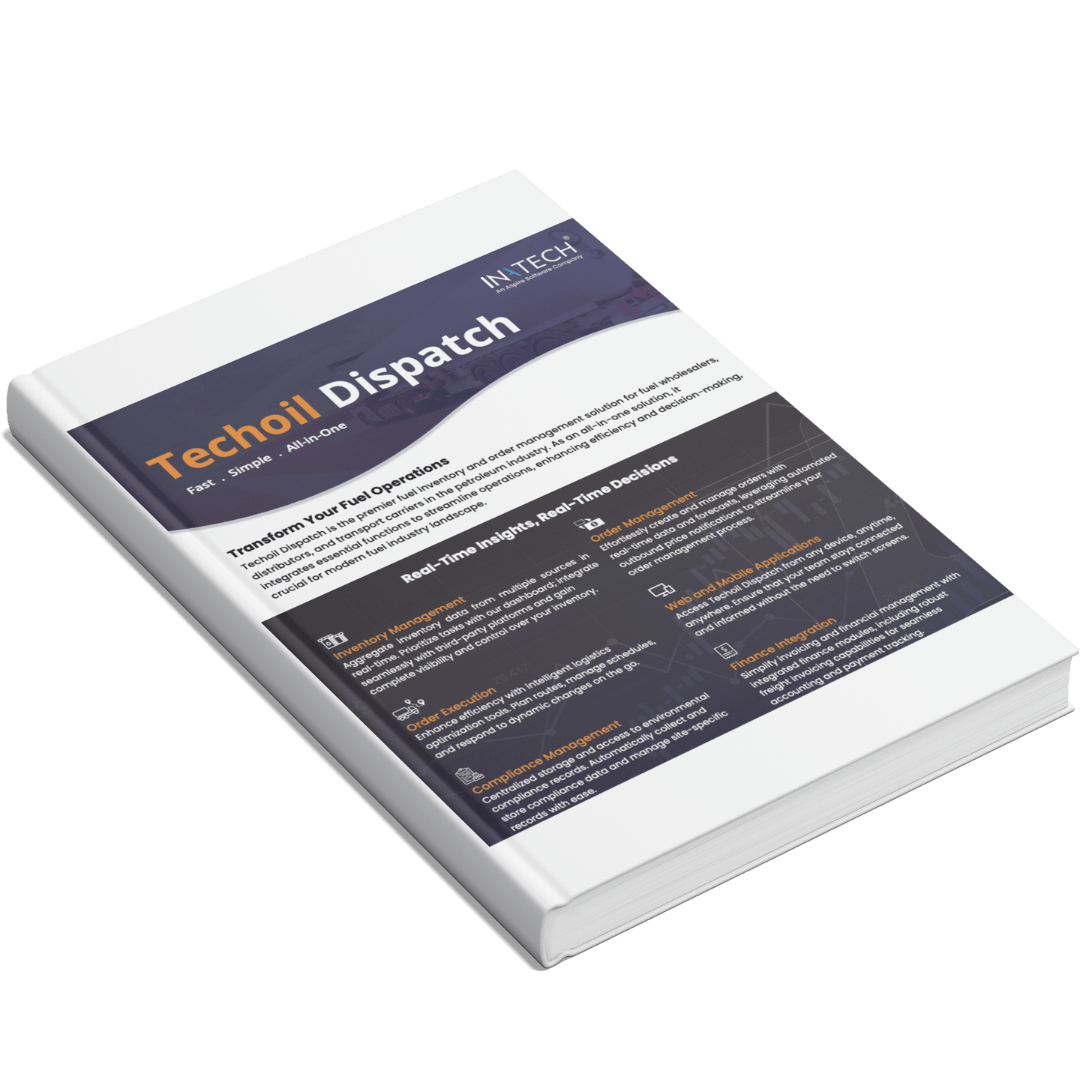

The renewable fuels sector – especially biofuels derived from feedstocks like used cooking oil (UCO), vegetable oil, hydrogenated vegetable oil (HVO), and fatty acid methyl ester (FAME) – is becoming an increasingly important part of the low-carbon transition. The trading, risk-management and supply-chain demands in this space pose unique obstacles.
The Inatech Renewable Fuels ETRM is described by Inatech as “a dedicated cloud-based, real-time, end-to-end trading and supply management software for biofuel and renewable fuel traders” (built on modern architecture, with analytics and ERP-integration).
In this guide we will:
- Explain why traditional ETRM systems may need adaptation for biofuels trading
- Outline the key functional features necessary for biofuels / renewable fuels ETRM systems
- Discuss how companies engaged in biofuels procurement and trading can leverage software
- Consider how firms might integrate fossil fuel operations with biofuels-trading operations
- Review regulatory and compliance considerations specific to biofuels and credit instruments
Why Traditional ETRM Systems May Need Adaptation for Biofuels Trading
Many energy-trading and risk-management systems are built for commodities such as oil, gas or power, where volumes, logistics and contract structures are relatively well-established. When you shift into biofuels/renewable fuels, the business model introduces new dimensions that may not be fully covered by legacy systems.
Key Reasons for Adaptation
- Feedstock supply chain complexity: Biofuels often require sourcing of diverse feedstocks (vegetable oils, UCO, HVO, FAME), each with its own specification, logistics, quality variation and regulatory eligibility.
- Credit and certification trading: Biofuels frequently tie into emissions-credit programs (for example RINs, LCFS credits, Cap & Trade schemes). A system built solely for physical commodity trades may not integrate the credit-instrument side of the business.
- Logistics & inventory management: Multiple modes of transport (vessel, rail, road), multiple feedstock types and cost structures- these introduce more complex logistics and inventory tracking than a standard baseload fuel.
- Risk modelling tied to hybrid exposures: With biofuels, you may have exposure to feedstock price risk, conversion yield risk, logistics risk, regulatory-eligibility risk, and credit-market risk. A traditional ETRM may not support all these dimensions.
In short, if a trading company is involved in biofuels, the system should handle both the physical trading / supply chain side and the environmental-credits side, along with logistics complexity. A standard fossil-fuel ETRM may need significant adaptation.
Essential ETRM Features for Biofuels / Renewable Fuels Trading
When evaluating or designing a software solution for biofuels trading, the following functional areas map directly to the unique needs of the business. Checking these will help ensure the tool is fit-for-purpose.
2.1 Integrated Trading & Supply Chain Management
- The system should support “front, mid and back-office” workflows: trade capture (physical and financial), position keeping, logistics, invoicing.
- Feedstock supply: track sourcing contracts for vegetable oil, UCO, etc., conversion to renewable fuels, output volumes, yield/spoilage, logistics.
- Inventory costing and management: support for multiple costing methodologies (e.g., weighted average cost, FIFO, LIFO)
- Logistics support: multiple modes of transport (vessel, rail, road), traceability of shipments, integration with bill of lading (BOL) reporting.
2.2 Emissions/Credit Instruments Trading
- The platform should allow trading of credit instruments linked to renewable fuels: e.g., RINs (U.S.), LCFS credits (California), Cap & Trade allowances.
- Integration of credit trading with physical operations: e.g., when renewable fuel production creates credits, those credits must be tracked, monetised, and tied to production volumes and contracts.
- Position-keeping, P&L modules, stress testing & hedge effectiveness for credits.
2.3 Real-Time Position Management & Analytics
- The system should present real-time dashboards of physical exposure, inventory, shipments, P&L.
- Risk-analytics: what-if scenario modelling, portfolio analytics, VaR, margin optimisation.
- Integration with external systems and data-feeds: e.g., weather is less critical here than feedstock and logistics data, but feedstock price indices, credit-price feeds, transport cost feeds matter.
2.4 Unified Data Entry & Single Version of Truth
- Avoid manual spreadsheets and multiple platforms
- Straight-through processing: from trade capture to invoicing and settlement without manual reconciliation overhead.
Summary Feature Checklist
Here’s a distilled checklist for biofuels/renewable fuels ETRM systems:
- Support for feedstock sourcing, conversion/yield tracking, renewable-fuel production
- Inventory costing (weighted average, FIFO, LIFO)
- Logistics/shipment tracking (vessel/rail/road)
- Credit instrument trading (RINs, LCFS, Cap & Trade, UCOME etc)
- Real-time dashboards: P&L, inventory, position
- Risk analytics: margin optimisation, hedge effectiveness, stress testing
- Integration with external data/feeds
- End-to-end workflow (front → back) with single data-entry point
- Unified reporting (physical + credit/financial)
A software solution lacking in several of these areas may lead to manual workarounds, increased operational risk and less visibility.
Corporate Renewable Fuels Procurement & Credit Trading
In the biofuels domain, many companies – both producers and traders – are actively procuring renewable fuels, seeking to monetise credits and ensure compliance. Software plays an increasingly important role.
Key Trends
- Feedstock diversity is increasing: used cooking oil (UCO), vegetable oil, HVO, FAME are all part of the modern biofuels supply chain..
- Regulatory frameworks are expanding: credit instruments (RIN, LCFS, Cap & Trade, UCOME) are more central to project economics and trading strategies.
- Trading of both physical fuels and associated credits is becoming standard practice—and integrated software supports this.
Role of Software in Procurement & Trading
- Contract capture: feedstock supply agreements, renewable fuel offtake agreements, credit-sales contracts.
- Volume and yield forecasting: estimating feedstock availability, conversion yields, eligibility for credit schemes.
- Settlement automation: linking physical production, credit issuance, credit trades, invoices, P&L.
- Analytics for margin optimisation: combining physical fuel margins + credit margin + logistics + inventory cost.
- Visibility for management: dashboards that show daily physical exposure, inventory position, reconciliation of shipments (BOLs) as Inatech outlines.
Integrating Traditional Fuel & Renewable Fuels Trading Operations
Some trading companies operate both traditional fuel/business lines (diesel, gasoline, crude) and renewable fuels. Having separate systems for each can create inefficiencies, data silos and fractured reporting.
Why Integration Matters
- A unified platform simplifies operations: trade capture, logistics, inventory, settlement, credit trading across all fuel types.
- Shared data and workflows: e.g., same inventory costing engine, same risk analytics platform, same dashboards.
- Scalability: As regulatory pressure grows, being able to shift from traditional to renewable fuel trading without wholesale system changes is an advantage.
Migration/Adoption Advice (Measured)
For firms looking to integrate:
- Map current systems: fuel‐trading systems, fuel-logistics systems, credit-tracking systems.
- Identify gaps specific to biofuels: feedstock sourcing, credit‐instrument trading, logistics/inventory complexity.
- Choose a platform that allows extension from traditional fuel trading to biofuels + credits without separate stacks.
- Phase rollout: pilot renewable fuels/credits module, integrate with existing fuel-trade flows, then scale.
- Ensure consolidated reporting and dashboards across all business lines.
Regulatory & Compliance Considerations for Biofuels Trading
In biofuels and renewable fuels trading, regulatory and credit-market compliance is central to both risk management and profitability.
Credit Instruments & Market Schemes
- The U.S. markets: RINs (Renewable Identification Numbers), LCFS (Low Carbon Fuel Standard) credits, Cap & Trade.
- Global scope: schemes such as UCOME, FAMEO, ETS in Europe and other regions
- Eligibility criteria: feedstock types, vintage, supplier certification, compliance vs voluntary claims. Tracking and auditing these is critical.
- Inventory and logistics traceability: For example, reconciling shipments (BOLs) to feedstock claims.
What to Look for in a Platform
When evaluating software for biofuels trading, ensure it supports:
- Tracking of feedstock/renewable fuel eligibility for credit schemes
- Credit issuance, trading, retirement workflows
- Audit-trail and reconciliation of physical shipments to credits (BOLs, inventory)
- Real-time P&L and risk reporting including credit exposures
- Adaptability for evolving regulation and new credit types
Conclusion
Biofuels and renewable fuels trading represents a specialised subset of the low-carbon energy sector. It combines physical fuel trading, complex supply chains (feedstocks, logistics), and credit/instrument markets (RINs, LCFS, Cap & Trade). A trading system built for generic fuel trading may not cover all these layers without extension.
When evaluating ETRM software for this space, key dimensions to check include: feedstock sourcing, conversion/production tracking, inventory & logistics, credit-instrument trading, real-time analytics, risk tools and unified workflows.